
On March 31, a source map left in Anthropic's npm package exposed the full TypeScript source of Claude Code. Within hours, thousands of developers were reading through it. The Hacker News thread hit 3,000 upvotes. A visual guide went up at ccunpacked.dev. People wrote blog posts, Reddit breakdowns, Bluesky threads.
Everyone was looking for the same thing: how does the most successful AI coding agent actually work? What's the secret architecture? What's the trick Anthropic figured out that the rest of us haven't?
They found a file called print.ts. It was 5,594 lines long. One function inside it spanned 3,167 lines across 12 nesting levels. The frustration detection system was a regex that matched "wtf," "shit," and "fucking broken." The multi-agent orchestration was implemented as system prompt instructions. One commenter on Bluesky summarized the consensus: "People who looked at the original code behind Claude Code are not exactly impressed."
They're right about the code quality. They're wrong about what it means.
The Garbage That Ships
Here's what people found when they dug in.
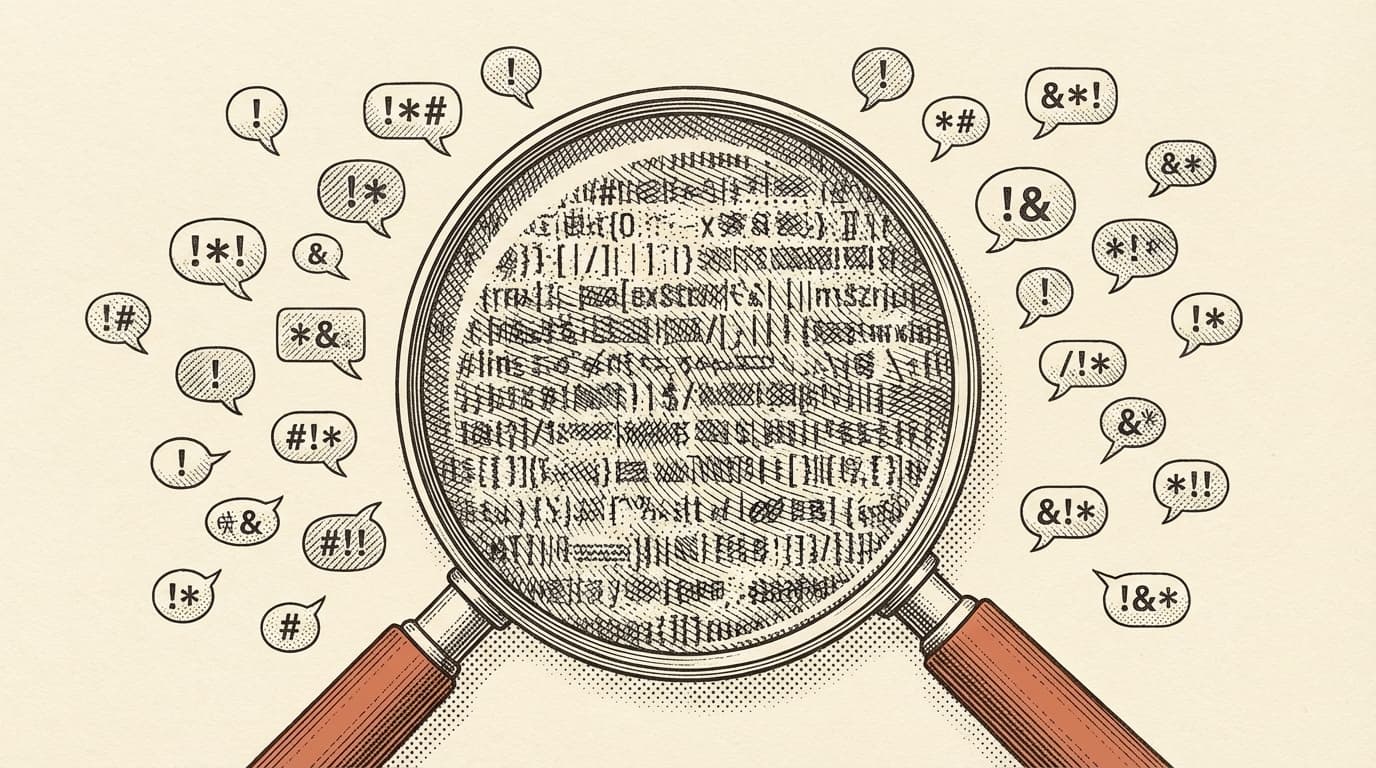
The frustration detection lives in a file called userPromptKeywords.ts. It's a regex. Not a fine-tuned classifier, not a sentiment analysis model, not an LLM inference call. A regex that pattern-matches profanity and frustration language. It costs zero tokens and runs in microseconds.
The anti-distillation system injects fake tools into API calls to poison training data from competitors scraping the API. It's gated behind four separate conditions — a compile-time flag, a CLI entrypoint check, a first-party API check, and a feature flag. A blog post noted it can be bypassed with a MITM proxy or a single environment variable.
The bash security module has 23 numbered checks and blocks 18 Zsh builtins. It defends against unicode zero-width space injection, IFS null-byte attacks, and Zsh equals expansion. These are the kinds of things you learn about after someone exploits them in production.
The prompt caching system tracks 14 different vectors that can break the cache. It uses "sticky latches" to prevent mode toggles from invalidating cached prompts. One function is annotated DANGEROUS_uncachedSystemPromptSection() — the kind of name you write at 2am after the third incident.
There's an unreleased Tamagotchi companion system with 18 species, rarity tiers, RPG stats called DEBUGGING and SNARK, and a 1% shiny drop rate. Species names are encoded with String.fromCharCode() specifically to evade their own build system's grep checks.
None of this is elegant. All of it shipped and works.
Frustration Regex Is an Engineering Decision
The frustration regex got the most mockery. A regex? For detecting user emotion? In 2026?
But think about what the alternatives cost. An LLM inference call to classify user sentiment takes 200-500ms and burns tokens on every single user message. A fine-tuned classifier needs training data, a deployment pipeline, and ongoing maintenance. A regex takes nanoseconds, has zero cost, never hallucinates, and catches the cases that actually matter — when someone types "this is broken" or "wtf" they are not being subtle about their emotional state.
The regex doesn't need to catch every frustrated user. It needs to catch the obvious ones fast and cheap. That's a different engineering problem than "build a sentiment classifier," and the regex solves it better.
This is the pattern throughout the leaked codebase. Every decision that looks hacky in isolation looks pragmatic in context. The 23 bash security checks exist because 23 specific attack vectors were discovered in production. The fake tool injection exists because model distillation is a real competitive threat. The prompt cache tracking 14 break vectors exists because 14 things actually broke the cache.
The code isn't messy because the engineers don't know better. It's messy because production is messy, and they chose to fix real problems over refactoring the fix.
Everyone Builds the Same Thing
The part of the leak that stuck with me wasn't the code quality. It was the architecture.
Claude Code's multi-agent coordination lives in coordinatorMode.ts. The orchestration algorithm is implemented as system prompt instructions. Not a DAG execution engine. Not a state machine library. Not a graph database. System prompt text that says things like "Do not rubber-stamp weak work" and "You must understand findings before directing follow-up work."
I've been building an agent orchestrator for months. The core of my system is also prompt instructions and tool definitions. I arrived at this independently, and when I read the leaked coordinator mode, my first reaction was recognition, not surprise.
The same week the leak dropped, a Reddit post hit 221 upvotes describing a 3-agent team pattern: Architect, Builder, Reviewer. The poster had replaced "chaotic solo Claude coding" with this structured team and called it "stupidly effective." Their coordination mechanism? Prompts that tell each agent its role and boundaries.
A Bluesky user posted: "Claude Code is great for single-agent work. The interesting challenge starts when you run 3+ agents in parallel — orchestration, task dispatch, and making sure they don't stomp on each other's files." That's the exact problem I spent two months solving. The answer, every time, is not more sophisticated frameworks. It's clearer instructions and better-scoped tools.
I wrote a month ago that agent frameworks are solving the wrong problem — that context management matters more than orchestration plumbing. The Claude Code leak is the evidence I didn't have then. The most successful agent in production doesn't use a framework. It uses prompts, tools, and pragmatic code to manage context.
What the Leak Actually Proved
The popular reading of the leak is that Anthropic writes bad code. The build.ms analysis captured the more interesting takeaway: "The real value in the AI ecosystem isn't the model or the harness — it's the integration of both working seamlessly together."
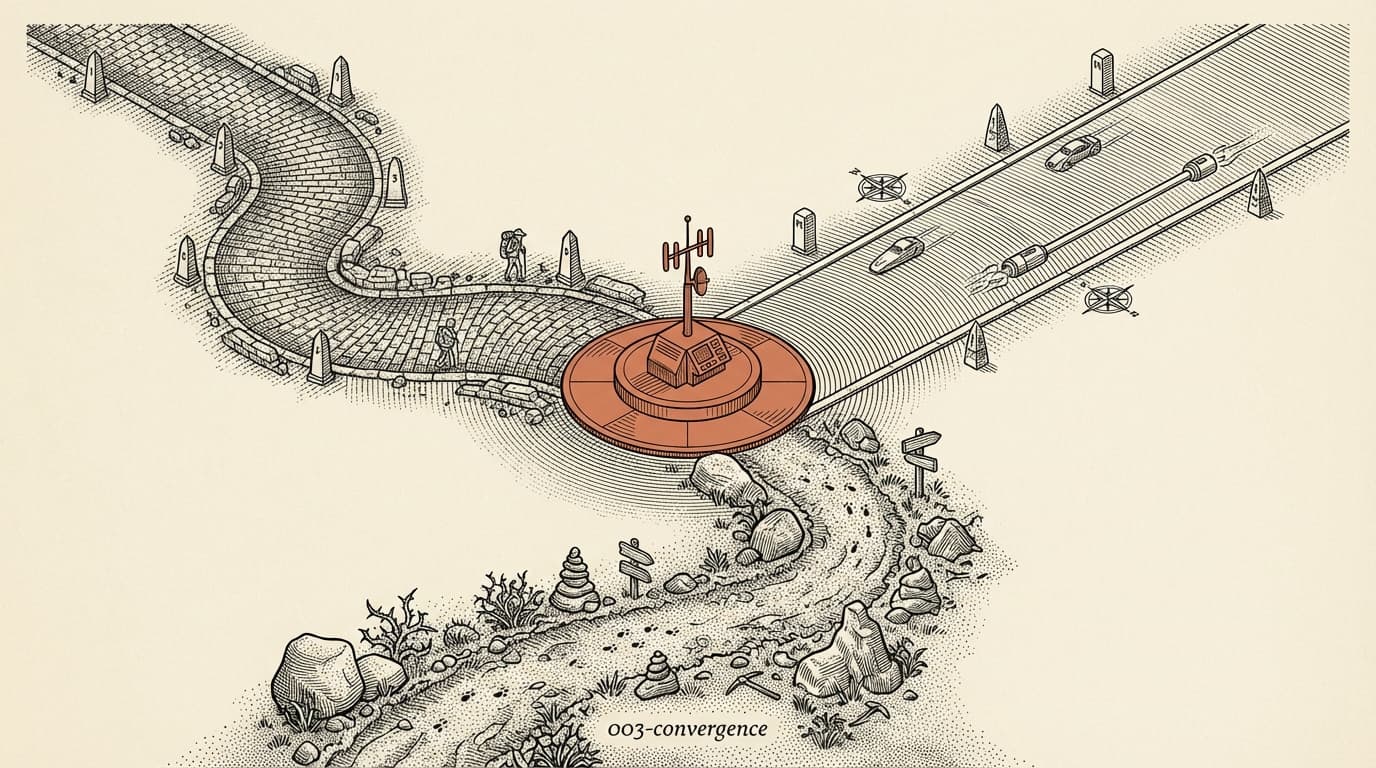
Someone in the thread pointed to a competing agent called "pi" that uses exactly four tools: read, write, edit, and bash. That's it. Four operations. The same core loop Claude Code runs, stripped down to the minimum. Both work. The pi agent is minimal and clean. Claude Code is sprawling and messy. They converge on the same interaction pattern because the pattern is dictated by the problem, not the implementation.
This is what agent architecture convergence actually looks like. Not everyone agreeing on a framework. Everyone independently arriving at: give the model tools to read and write files, let it run commands, manage context aggressively, and handle the edges with whatever works. Regex, latches, 23-check security modules, sticky caches. The specifics are different. The shape is the same.
The auto-compact system is a good example. Claude Code was burning 250,000 API calls per day from sessions hitting 50+ consecutive compaction failures. Some sessions failed 3,272 times in a row. The fix was MAX_CONSECUTIVE_AUTOCOMPACT_FAILURES = 3. Three lines of code, directly addressing a metric that was on fire. Not a redesign of the compaction system. A pragmatic cap.
The Part Nobody Talked About
Buried in the feature flags is something called KAIROS. It's an unreleased autonomous agent mode with a /dream skill for "nightly memory distillation," daily append-only logs, GitHub webhook subscriptions, background daemon workers, and a 5-minute cron-scheduled refresh.
The leaked codebase everyone's judging is the harness for an interactive coding assistant. KAIROS is the harness for something that runs when you're not watching.
If every agent builder converges on the same interactive architecture — tools, prompts, context management — then the next differentiator isn't how agents help you code. It's whether they keep working after you close the terminal. Background execution, memory, autonomous scheduling. That's where the actual architectural decisions start to matter, because the failure modes are different when there's no human in the loop to type "wtf" and trigger the frustration regex.
The Claude Code leak didn't reveal Anthropic's secret sauce. It revealed that there isn't one — not for the interactive agent, anyway. The interactive problem is solved. It's messy, it's regex, it's 5,594-line files. And it works.
The question that matters now is whether the same pragmatic approach scales to agents that don't have a human supervising every loop. I don't think anyone knows yet, including Anthropic. The KAIROS feature flags are there. The code isn't.